Crown thinning in Regentspark
When trees start to feel too dense, too shaded, or simply too heavy in the canopy, crown thinning in Regentspark can be the right solution. It is a careful tree surgery service designed to reduce overcrowding within the crown while keeping the tree’s natural shape, health, and character intact. For homeowners, landlords, estate managers, and commercial property owners in Regentspark, this can make a real difference to light levels, airflow, appearance, and long-term tree performance.
In a local area with a mix of elegant residential streets, mansion blocks, communal gardens, courtyards, terraces, and busy commercial premises, trees often need specialist attention rather than heavy-handed cutting. A well-planned crown thinning service can help trees sit more comfortably within their surroundings, especially where branches are close to windows, rooflines, pavements, or neighbouring plots.
If you are looking for a practical, tidy, and arboricultural approach, crown thinning Regentspark customers can rely on should always be carried out by experienced tree specialists who understand species, structure, and the local setting. Done properly, it is about improving the tree without making it look stripped back or stressed.
What crown thinning actually means

Crown thinning is the selective removal of branches throughout the tree canopy. The aim is to reduce the density of the crown while keeping the overall outline and size largely unchanged. Unlike topping or indiscriminate cutting, thinning is targeted and controlled. It focuses on removing suitable branches to improve the tree’s structure, not just making it smaller for the sake of it.
For many Regentspark properties, this is the preferred option where trees are healthy but becoming overly compact, wind-resistant, or light-blocking. It is often chosen for decorative garden trees, mature specimen trees, boundary trees, and trees that sit near communal spaces where dappled light is welcome but deep shade is not.
Professional tree thinning can also reduce the visual bulk of a canopy, which can be helpful when trees begin to dominate a small urban garden or overhang a roof terrace. It is a subtle form of tree care, but the benefits can be significant.
Why local property owners in Regentspark request crown thinning

Tree work in Regentspark is rarely one-size-fits-all. The area includes a mix of period homes, mansion-style residences, apartment buildings, private gardens, mews properties, and commercial premises with limited outside space. These settings often create specific challenges: branches brushing façades, blocked daylight, leaf build-up, and reduced air movement around windows and roof areas.
Many local customers ask for crown thinning because they want to preserve mature trees without losing too much light. In a dense urban environment, a large canopy can cast heavy shade over patios, planting beds, conservatories, and lower floors. A thoughtful thinning can make a garden more usable, brighter, and less enclosed.
It is also common for Regentspark tree owners to be concerned about wind loading. When a tree has a very dense crown, it can catch more wind and place extra strain on limbs and trunk attachments. While crown thinning is not a cure for structural defects, it can help reduce resistance in a managed and appropriate way when carried out by a qualified tree surgeon.
How crown thinning helps the tree and the property
For the tree itself, crown thinning can improve airflow and light penetration through the canopy. That can support better overall vitality by reducing stagnant, crowded growth and allowing the remaining foliage to develop more evenly. It can also help reduce the risk of some branches rubbing against each other, which may otherwise create weak points or damage the bark.
For the property owner, the benefits are often practical. More natural light can enter rooms, gardens can feel less closed-in, and gutters, paths, and outdoor seating areas can stay cleaner for longer when overhanging foliage is reduced carefully. In some situations, better visibility through the canopy may also help with safety around access routes, parking areas, and communal entrances.
There is also an aesthetic benefit. A tree that has been selectively thinned often looks lighter, fresher, and more balanced. Instead of appearing harshly cut back, it should still look like a well-kept mature tree.
What is included in a professional crown thinning service
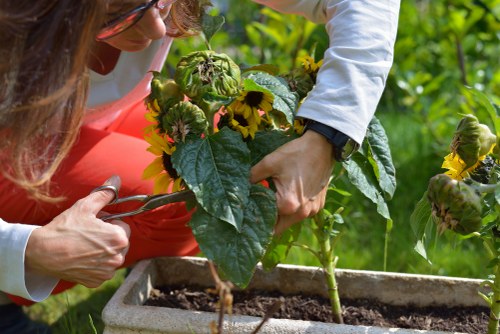
A proper crown thinning service should start with a visual assessment of the tree, the surrounding space, and any practical constraints. The arborist will look at the species, crown structure, condition of the branches, proximity to buildings, and access points for equipment and waste removal. This helps determine whether thinning is the right treatment, and if so, how much work is suitable.
Typical service steps may include:
- Inspecting the tree before work begins
- Identifying branches suitable for selective removal
- Thinning the crown evenly, rather than leaving bald patches
- Maintaining the tree’s natural shape and balance
- Removing dead, damaged, or crossing branches where appropriate
- Clearing and tidying all arisings after the work is complete
In Regentspark, where access can be tight and shared spaces are common, tidy working methods matter just as much as the pruning itself. A local team used to working in smaller gardens, internal courtyards, and controlled access sites will normally plan the job carefully to minimise disruption.
When crown thinning is the right choice

Crown thinning is not needed for every tree. It is usually the best option when the tree is healthy enough to keep, but the canopy has become too dense for its surroundings. If your tree is blocking too much light, creating heavy shade, or catching strong winds in an exposed position, thinning may be recommended.
This service can be especially useful for:
- Mature ornamental trees in residential gardens
- Trees growing near windows, balconies, and roof terraces
- Boundary trees affecting adjoining properties
- Specimen trees in landscaped communal grounds
- Commercial sites where canopy control supports appearance and usability
It is important to remember that crown thinning is different from crown reduction. Thinning removes selected internal branches to reduce density, while reduction shortens the overall height or spread. Choosing the correct method is essential if you want the tree to stay healthy and attractive.
Why a local Regentspark tree team is useful
Choosing a local company for crown thinning in Regentspark can save time, reduce disruption, and improve the overall experience. Local teams are usually more familiar with the kind of properties in the area, the access issues that can arise, and the expectations of residents and property managers who need work done neatly and efficiently.
In Regentspark, access may involve narrow side passages, shared entrances, limited on-street parking, or controlled entry to communal gardens and commercial yards. A team that regularly works in the area is more likely to plan around these practical details, bringing the right equipment and enough staff to complete the job with minimal fuss.
Local knowledge also helps when trees are close to other valuable features such as paving, railings, planted borders, heritage-style facades, or sensitive communal areas. A careful local tree surgeon understands that the job is not only about the tree, but about protecting the property and keeping neighbours in mind.
Common tree types and settings in Regentspark
Many different species may benefit from selective crown thinning, depending on their growth habits and the site they are in. Some trees naturally form dense canopies, while others become crowded after years of growth or when previous pruning has been inconsistent.
In and around Regentspark, crown thinning may be considered for trees such as maples, planes, lime, cherry, birch, ornamental apple, hawthorn, and other mature garden or avenue trees. The exact pruning approach will depend on the species, the season, and the tree’s current health and structure.
The local environment also matters. Trees in front gardens, rear gardens, shared courtyards, and commercial forecourts often experience different pressures. A tree near a café terrace will have different priorities from one in a private enclosed garden or beside a service access route. That is why a site-specific assessment is always valuable.
How the service works from start to finish
For most customers, the process begins with an enquiry and a discussion about the tree’s current issues. You may want more light, reduced density, better airflow, or help managing branches that feel too close to a building or boundary. From there, the arborist can explain whether crown thinning is suitable and what the work is likely to involve.
Once the job is scheduled, the team will usually arrive with access in mind, especially in streets where parking and loading can be difficult. They will protect the working area where needed, carry out the pruning using suitable techniques, and ensure the finished crown remains balanced and natural-looking. Waste is collected and cleared from the site so the property is left tidy.
For many residents and managers, this level of organisation is what makes a local service worth choosing. You want the tree improved without turning the day into a major disruption.
What to expect from a careful crown thinning job
A well-executed crown thinning job should not look drastic. The canopy should still feel full, but less congested. Light should pass through more readily, branches should feel better spaced, and the tree should continue to look like itself rather than an overcut version of itself.
Good tree surgeons work to preserve the natural habit of the species. That means avoiding excessive removal, keeping the tree’s outline coherent, and respecting the branch structure. This is particularly important in Regentspark, where trees often contribute to the character of a property and should not be damaged by overly severe work.
If you are unsure whether your tree needs thinning, reduction, or another form of pruning, it is usually best to ask for an inspection before any cutting begins.
Areas where crown thinning is especially helpful
Within Regentspark and the surrounding nearby districts, crown thinning is often useful in places where trees and buildings sit very close together. These can include private roads, courtyard developments, mixed-use properties, apartment gardens, and residential plots with mature planting close to boundary lines.
It can also be a practical solution in nearby areas such as Camden, St John’s Wood, Marylebone, Paddington, Fitzrovia, and Baker Street, where similar access constraints and space limitations often apply. Customers in these neighbourhoods frequently want to keep established trees but need a more manageable canopy for everyday use of their property.
Commercial customers may also request this service for offices, hospitality venues, healthcare premises, schools, and managed estates. Where appearance, safety, and usability all matter, selective thinning can be a smart maintenance choice.
Preparation checklist before your tree work
Preparing well for crown thinning can help the work run smoothly and reduce delays. If you are arranging the service for your home, block, or business premises, a few simple checks are worth making before the team arrives.
- Confirm which tree or trees need attention
- Ensure access routes are clear for tools and waste removal
- Move vehicles if space is limited and parking is tight
- Let neighbours or building managers know if shared access will be affected
- Point out any concerns such as cables, fragile planting, or surface restrictions
- Keep pets and children away from the work zone during the visit
These small steps can make a noticeable difference, especially in busy parts of Regentspark where parking, loading, and access are often at a premium. A good contractor will also advise you if anything else needs to be arranged beforehand.
Pricing factors for crown thinning
It is natural to want to understand the cost of crown thinning, but exact prices depend on several job-specific factors rather than a standard figure. The main influences usually include the tree’s size, species, height, canopy density, and location. Accessibility is another major factor, especially in Regentspark where some properties have limited front space or restricted rear access.
Other considerations may include the amount of waste produced, whether specialist equipment is needed, whether the tree is close to buildings or power-related obstacles, and how much time the work will take. A tree that is easy to reach in an open garden will generally be simpler to manage than a tree overhanging a roof or requiring careful sectional work.
If you are comparing options, ask for a clear explanation of what is included. Transparent service details are often more useful than a vague headline price. That way, you can judge value based on the actual work being carried out, not just the number on a quote.
Residential and commercial crown thinning in Regentspark
Homeowners often want more sunlight, improved garden usability, and a better view of the tree’s natural form. For residential customers, crown thinning can create a lighter atmosphere, especially where mature trees have gradually closed in over time. It is a useful way to keep a treasured tree while improving the everyday experience of the property.
Commercial customers may have different priorities. They often want to maintain an inviting exterior, keep entrances clear, reduce excessive leaf drop in key areas, and ensure outdoor spaces remain pleasant for staff, visitors, or customers. In managed developments and estate settings, the work may need to be coordinated carefully so that residents and businesses can continue operating with limited disturbance.
Whether the property is private or commercial, the aim is the same: improve the tree in a way that suits the site and supports long-term enjoyment of the space.
Health, safety, and responsible tree care
Crown thinning should always be done with safety and tree health in mind. Poor pruning can leave the tree vulnerable to stress, regrowth issues, or an unbalanced crown. Responsible arborists work selectively and avoid over-thinning, because removing too much foliage too quickly can harm the tree and undo the benefit of the service.
Safety also matters for people and property. Branches can be large, heavy, and unpredictable when cut. In a dense area like Regentspark, where trees may be close to windows, walkways, neighbouring gardens, or parked vehicles, controlled work practices are essential. That includes planning the cuts, using suitable equipment, and working methodically to keep the site safe.
If your tree is near a structure, boundary, or shared space, never assume a quick cut is the best cut. A careful assessment can prevent avoidable damage and help decide whether thinning is appropriate or whether another form of pruning would be better.
How to tell if your tree may need attention
Some signs are obvious, while others become noticeable only over time. A tree that is healthy but dense may still benefit from crown thinning, especially if it is affecting light and comfort around the property. You may want to consider an inspection if you notice any of the following:
- The canopy is very thick and blocks much of the daylight
- Branches are rubbing or crossing inside the crown
- The tree feels too heavy or visually overpowering
- Leaves and small debris are collecting in gutters or on paths
- Wind seems to move the crown strongly in exposed conditions
- Neighbours are affected by overhanging growth
Not every tree showing these signs needs the same treatment. The right answer depends on the species, condition, and setting. That is why it helps to speak to a tree specialist who can assess the situation in person.
Why customers choose crown thinning over heavier pruning
Many Regentspark customers prefer crown thinning because it is a balanced option. It improves light, air circulation, and appearance without taking the tree back too severely. For properties with established planting or mature landscape design, this gentler approach is often more suitable than hard reduction or drastic reshaping.
It can also be a good choice where you want to protect the tree’s long-term contribution to the property. Mature trees add value in ways that are not always immediately visible: they soften architecture, provide seasonal interest, and give privacy in urban settings. Keeping them healthy and appropriately maintained often makes more sense than removing them or cutting them too hard.
For many local owners, the goal is simple: keep the tree, improve the space, and avoid unnecessary disturbance.
FAQs about crown thinning in Regentspark
Is crown thinning suitable for all trees?
No. Not every tree should be thinned, and some species respond better than others. A qualified arborist will assess whether crown thinning is suitable based on the tree’s health, structure, and location.
Will the tree look unnatural afterwards?
It should not. A well-done thinning job keeps the tree looking like a natural version of itself, just less crowded. The aim is subtle improvement, not a harsh or overpruned result.
How much foliage can be removed?
That depends on the tree and the purpose of the work. The amount removed should be carefully considered so the canopy remains healthy and balanced. Over-thinning can be harmful, which is why restraint matters.
Can crown thinning reduce shade in my garden?
Yes, in many cases it can help reduce heavy shade by opening the crown and allowing more light through. If shade reduction is your main goal, the arborist may also discuss whether another pruning method would be more effective.
Do I need permission before the work starts?
Some trees may be protected by local controls or conservation-related restrictions, so it is sensible to check before any work is carried out. A professional tree team can help advise on this as part of the planning stage.
Why choose a professional service for crown thinning in Regentspark
Tree surgery is skilled work, and crown thinning is most effective when carried out by people who understand both arboriculture and local conditions. A professional service brings the right tools, the right judgement, and the right approach to handling trees in built-up environments. That matters in Regentspark, where properties are often close together and the margin for error is small.
Professional tree care also gives you greater confidence that the work will be proportionate. Rather than removing too much or creating an uneven result, the tree is shaped with care and the surrounding property is treated respectfully. This is particularly important for customers who value presentation as well as practicality.
If you want the tree improved without needless disruption, a local specialist is the sensible choice.
Book crown thinning in Regentspark
If your tree is becoming too dense, too shady, or too dominant for its setting, now is a good time to arrange an inspection. Crown thinning in Regentspark can offer a practical way to restore balance while keeping mature trees looking natural and well cared for.
Whether you manage a private home, a block of flats, a landscaped communal garden, or a commercial site, a tailored pruning service can help you make the most of your outdoor space. Contact us today to request a free quote, discuss your tree, and find out whether crown thinning is the right option.
Book your service now and take the first step toward a lighter, cleaner, and better-managed canopy.